Disney Explores Robots for 3D Glasses and AI Tools for Filmmaking
Disney Accelerator’s 2026 Demo Day connected emerging technologies to practical tasks, from arranging 3D glasses for cleaning to developing visual concepts for Disney songs.
The short answer: Disney Accelerator’s 2026 Demo Day connected emerging technologies to practical tasks, from arranging 3D glasses for cleaning to developing visual concepts for Disney songs.
In this article
Between shows, someone has to get the 3D glasses ready for cleaning. Walt Disney Imagineering and Physical Intelligence are exploring whether adaptable robots could help handle and arrange them—a practical assignment for technology often discussed in much grander terms.
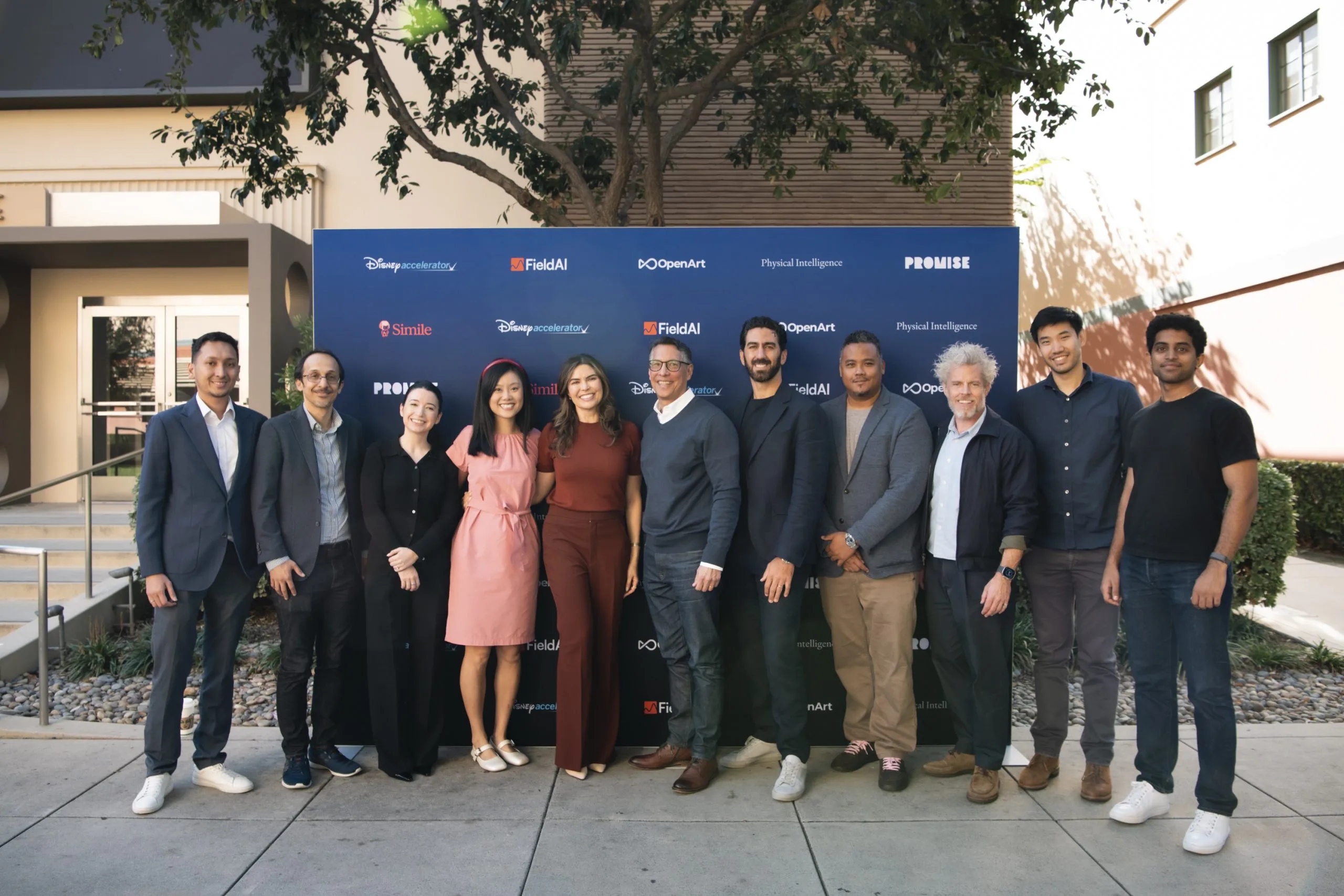
That backstage task was among the collaborations featured at Disney Accelerator’s November 3, 2026, Demo Day on the Walt Disney Studios lot. After four months working with Disney teams, this year’s five participants showed how their technologies might fit into filmmaking, music, park operations and visit planning. For the new cohort, the focus was on exploring applications, not launching guest services.
The glasses offer a useful explanation of the challenge. As TheWrap reported, differences in their sizes and in how they are stored and cleaned make the work difficult to automate. Physical Intelligence’s collaboration examines whether robot-learning models can help machines manage that repetitive handling, with Disney identifying assistance for Cast Members as the goal.
Parking lots and the planning process
Outside the theater, another question is how robots could navigate a parking environment where terrain and weather change. FieldAI is exploring parking support with Disney Experiences Technology and Walt Disney Imagineering R&D. Imagineering is also studying whether its navigation and awareness capabilities could inform future character-based robotic experiences.
TheWrap reported that FieldAI demonstrated its technology using Boston Dynamics robots. CEO and co-founder Ali Agha told the outlet those machines were examples: the company’s technology could be applied to other robots, rather than being tied to the models on display.
Visit planning presents a less visible problem: how to make information easier to understand before a trip. Simile is working with Disney Experiences, including Walt Disney World, to explore tools that help teams interpret guest insights and refine ideas earlier. Product names, descriptions and the broader digital planning experience are among the details under examination.
From an actor’s performance to a song’s visuals
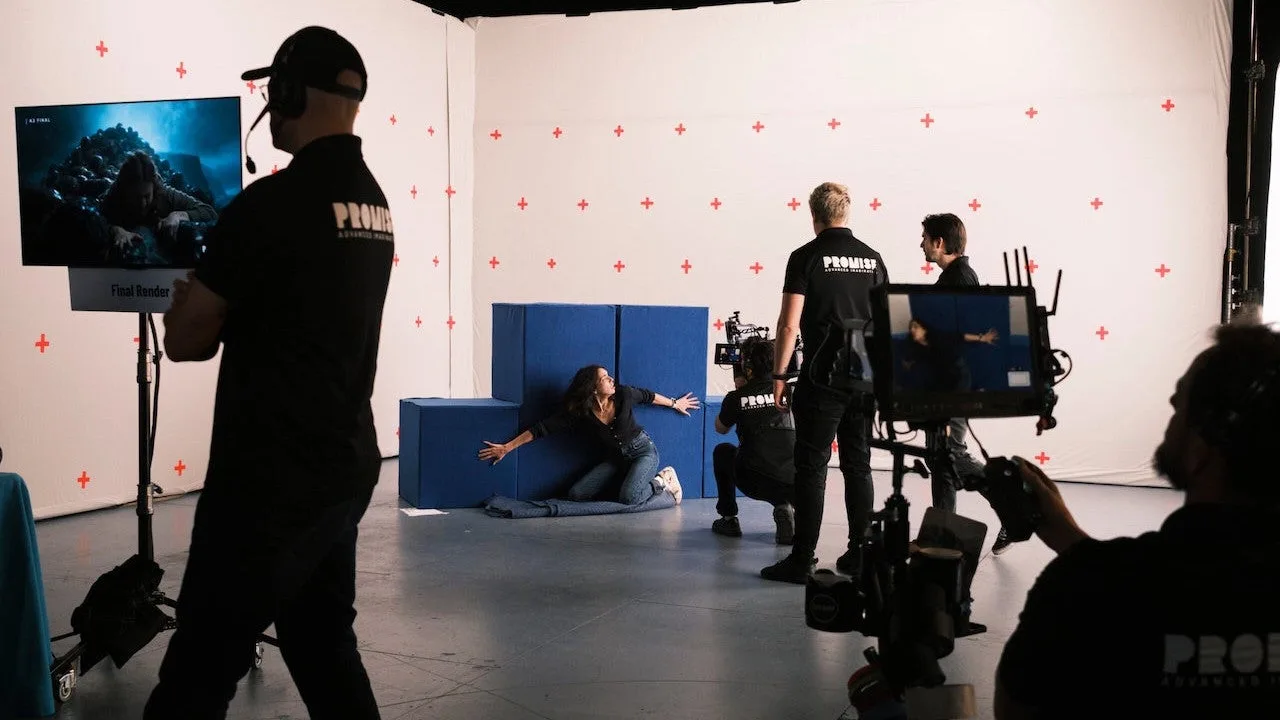
For movie fans, Promise’s demonstration offered a different kind of transformation. A live actor performed in a stripped-back “gray box” production environment, followed by a demonstration of how an artist could bring that performance into different story settings using generative tools. Promise and Walt Disney Studios are exploring how that combination could fit into filmmaking.
We’re working with the technology to see if it can fit into workflows that we have, so we have the artist involved along the way David Min, Disney VP of corporate innovation, speaking to TheWrap
The distinction between a demonstration and a production matters here. In TheWrap’s November 4 report, Promise CEO and co-founder George Strompolos said gray-box filmmaking remained in its early stages and Disney was not working on a project using that method.
Music teams are testing a related idea: exploring several visual interpretations before committing to one. OpenArt announced a collaboration with Disney Music Group to develop lyric-video concepts based on a song’s themes, mood and emotional tone. Disney described the potential benefit as evaluating concepts in hours rather than weeks.
The Los Angeles Times reported that the exploration starts with “Go the Distance” from the 1997 animated film Hercules. It described a process that generates a preliminary storyboard from the song, with Disney able to revise and fine-tune it. OpenArt CEO Coco Mao characterized the work as early exploration, focused on how AI might help Disney’s creative workflow.
For OpenArt executive Chloe Fang, who oversees entertainment and enterprise partnerships, the problem has a personal connection. She told the Los Angeles Times that she had played in a rock band and knew the difficulty of finding enough money, time and resources to make videos promoting a song. That experience helps explain the appeal of tools aimed at making visual development more accessible to musicians.
What returning participants have already made
Returning members of the 2025 Accelerator class supplied a useful contrast. Industrial 3D-printing company Haddy displayed set pieces and prototypes made with Imagineering. Its exhibit included a replica of a prop canoe; the original is installed in Disneyland Resort’s Jungle Cruise. The display also included a King Louie throne featured at Shanghai Disney Resort. TheWrap reported that Haddy uses AI to help robotic arms print large-scale 3D objects, connecting the technology to the physical pieces shown at Demo Day.
Animaj’s FlipMove workflow has also moved into production. Starting from an artist’s sketched animatic, it builds staged 3D shots and supports tasks including layout, director revisions and the animation between key poses. It is being used on Ozzy Fox, a series co-developed with Disney Jr. The show has launched on YouTube, and Animaj and Disney Jr. are already in production on Season 2. Unlike the new cohort’s exploratory collaborations, FlipMove is a tool already being used to make a show.