Monsters, Inc. Video Compares Harryhausen’s Storyboards and Film
The 25th-anniversary video revisits Mike and Sulley’s attempt to catch Boo, opening a window onto the craft behind Monsters, Inc.
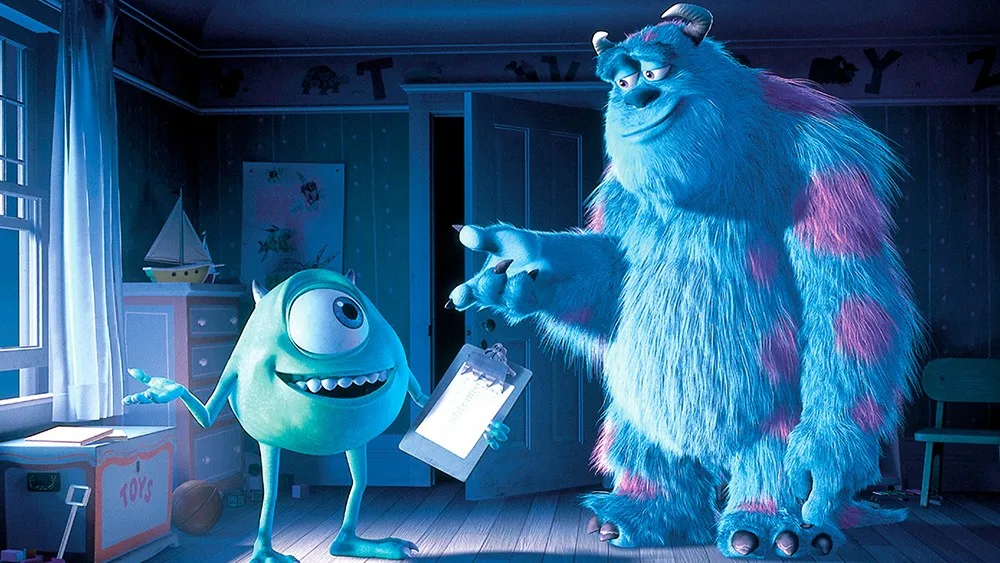
The short answer: The 25th-anniversary video revisits Mike and Sulley’s attempt to catch Boo, opening a window onto the craft behind Monsters, Inc.
Mike and Sulley are trying to capture Boo—and Pixar is taking that predicament back to the drawing board. A new Monsters, Inc. video places the storyboards for the “Harryhausen’s Dinner” scene alongside the finished animation, tracing the sequence from drawings to film.
Published November 2, 2026, for the movie’s 25th anniversary, the comparison returns to a story built on an upside-down fear: monsters frighten children to collect their screams as energy, yet are themselves terrified of children. That reversal gives the attempt to catch one little girl its stakes.
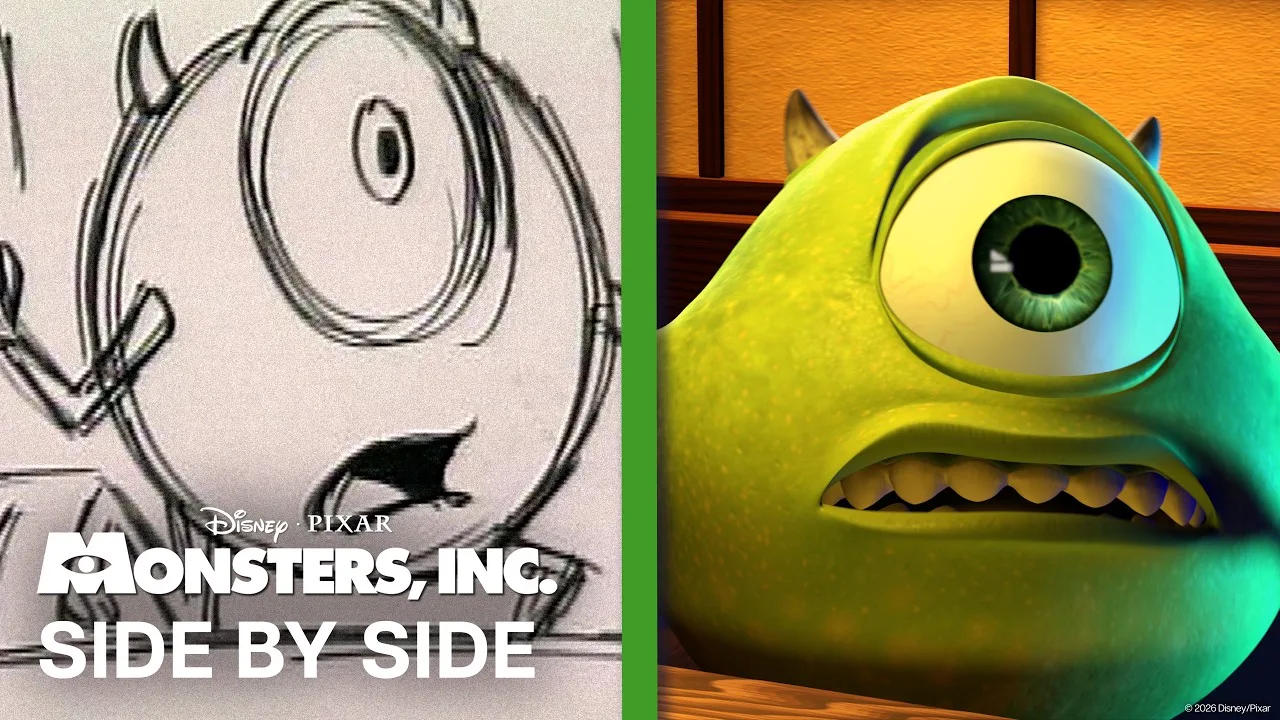
Even the restaurant’s name carries a filmmaking connection. Harryhausen’s honors visual-effects pioneer Ray Harryhausen. In comments reported by Animated Views, director Pete Docter explained that Harryhausen’s pioneering work served fantasy, making a restaurant in a film about monsters a fitting place for the tribute.
More than drawings becoming animation
The comparison also offers a way into the film’s wider creative process. In Animation World Magazine’s production coverage, Docter described developing the initial ideas with story artist Jeff Pidgeon and production designer Harley Jessup. Co-director Lee Unkrich oversaw editing, staging and cinematography, bringing a deliberately restrained approach to the virtual camera.
Even though we are doing animation I only do things with the camera that you can do in a live-action film. Lee Unkrich, speaking to Animation World Magazine about Monsters, Inc.
Keeping the characters consistent was another shared task. The same production account describes daily reviews in which animators critiqued work in progress and checked that each character behaved consistently across scenes handled by different artists. Those discussions helped the team maintain coherent performances even when several animators worked on the same character.
A later challenge: depth and fur
Years after the original storyboards, Pixar revisited the finished film for its 2012 stereoscopic recreation. The yearlong process, led by stereoscopic supervisor Bob Whitehill, involved more than adding depth uniformly: the team varied the strength of the 3D to suit the storytelling. When Sulley first puts Boo to sleep, for example, the depth was reduced to bring viewers closer to the characters.
Sulley’s fur posed a different problem. Whitehill explained that a random-number generator created its wind and motion effects, which could look slightly different each time the team rendered the film again. The artists had to monitor the fur carefully to maintain a consistent appearance in the final rendering—a new technical challenge for an already finished performance.